
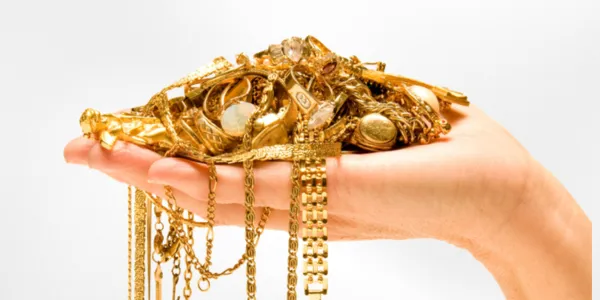
I Inherited Family Jewelry, Now What?
A Step-by-Step GuideIf you've recently inherited family jewelry, first of all, I'm sorry for your loss.
Sorting through a loved one's belongings is never easy, and jewelry can be one of the most difficult categories to navigate. Families often want to divide pieces fairly, preserve sentimental items, or avoid accidentally donating or selling something valuable.
The good news is that you don't have to figure everything out at once.
Before making any decisions, take the time to understand what you have. A little organization upfront can save time, money, and uncertainty later.
Quick Answer
If you've inherited jewelry, don't rush to sell or donate it. Start by sorting the pieces, separating anything obviously magnetic, looking for metal markings, and then having the remaining items inspected by a qualified jewelry professional. Taking these simple first steps will help you better understand both the sentimental and financial value of what you've inherited.
Step 1: Gather Your Supplies
Before you begin sorting, gather a few basic tools:
- A magnifying glass, jeweler's loupe, or magnifying app on your phone
- A heavy magnet (not a refrigerator magnet). Look for one from a hardware store or science surplus store that's designed to pick up tools or nails.
- Pen and paper for notes
- Small bags or boxes for sorting
- Your phone or camera
- A measuring device
Step 2: Use a Magnet to Begin Sorting
Simply stated, platinum, gold, and silver are not magnetic.Begin by testing each piece with your magnet. If a piece strongly sticks to the magnet, you can generally rule out gold, platinum, and sterling silver.
There is one important exception: clasps.
Many necklace and bracelet clasps contain small steel springs, so it's perfectly normal for only the clasp to be magnetic. If the rest of the chain isn't attracted to the magnet, don't automatically dismiss it.
Separate the strongly magnetic pieces into one group. These are most likely costume jewelry or made from non-precious metals. If a piece isn't magnetic, or only the clasp is, you haven't necessarily struck gold. It simply means the piece deserves a closer look.
Step 3: Look for Metal Markings
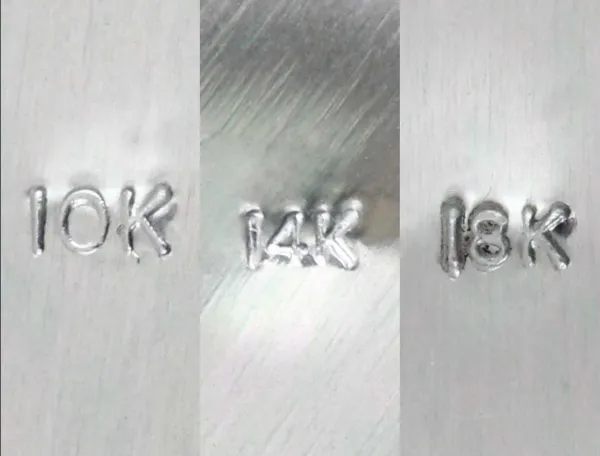
The next step is to inspect each piece for identifying marks. Using your magnification, look inside ring shanks, on clasps and end tags of chains, earring posts and backs, and anywhere else a manufacturer may have placed a stamp.These markings indicate the purity of the metal and can provide valuable clues about what you have.
Gold
Look for:10K
12K
14K
18K
KT
You may also find these numeric markings:
417 (10K)
583 or 585 (14K)
750 (18K)
If you see markings such as:
G.F.
H.G.E.
G.E.
these indicate Gold Filled, Heavy Gold Electroplate, or Gold Electroplate. These pieces generally have less intrinsic metal value than solid gold but can still be attractive and worth keeping.
You may also find markings such as 1/20 GF, meaning one-twentieth of the piece is gold-filled.
Platinum
Common platinum markings include:
PT950
950PT
PLAT
PT900
900PT
PT850
850PT
You may also encounter IRR Plat, indicating platinum alloyed with iridium.
Silver
Common silver markings include:925
Sterling Silver
Sterling
What If I Don't Find Any Markings?
Not every genuine piece of jewelry is stamped.Age, wear, repairs, or manufacturing methods can sometimes make markings difficult to find—or they may not exist at all. If a piece isn't magnetic but you can't locate a stamp, it's still worth having a professional inspect it before deciding whether it's valuable.
Common Mistakes to Avoid
When sorting inherited jewelry, there are a few mistakes worth avoiding:- Don't assume broken jewelry has no value.
- Don't assume costume jewelry has no sentimental value.
- Don't aggressively clean antique or vintage pieces before having them inspected.
- Don't throw away loose gemstones or damaged settings—they may be reusable.
When You're Ready for the Next Step
Once you've finished sorting your jewelry, separated the magnetic pieces, and identified any visible metal markings, you're ready for a professional inspection.Most jewelry professionals charge for their time, so the more organized your collection is beforehand, the faster, and often less expensive, the process becomes.
Before your appointment, it's also helpful to ask yourself a few questions:
- Do I want to keep the pieces as they are?
- Would I prefer to remount some of the gemstones?
- Do I have old appraisals or sales receipts that belong with these items?
- Would I prefer to sell some of the pieces?